
The walk to school that came back
January 5, 2026 · 2 min read
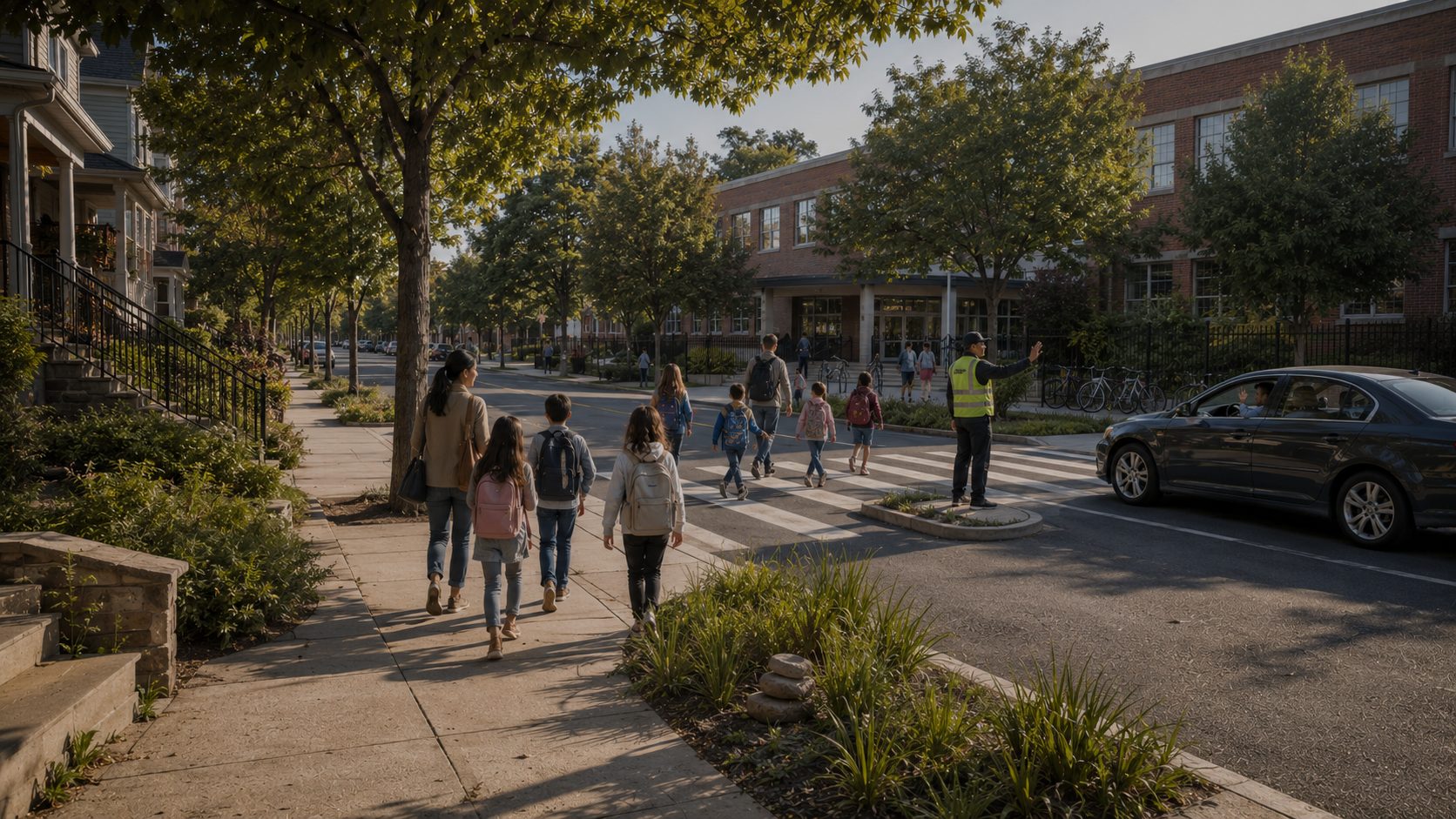
A generation ago, walking to school was the default. Today, in much of the United States, it is the exception, and the school car line has become its own morning traffic problem. Safe Routes to School, a national program running since 2005, set out to reverse that, and its evaluations offer one of the clearest lessons in this field.
The results: active school travel rose from about 12.9 to 17.6 percent in national evaluations, and child pedestrian and cyclist injuries fell by roughly 14 to 44 percent depending on the setting. The wide range is the lesson. The strong end of it belongs to places that paired encouragement with engineering: sidewalks completed along the actual routes children take, crossings made visible and short, driver speeds brought down near the school. The weak end belongs to places that relied on encouragement alone.
14 to 44%
Fewer child pedestrian and cyclist injuries where encouragement arrived together with engineering.
Source: NHTSA and state SRTS evaluations
Why the pairing matters
A walking-school-bus program or an event day can start a habit, and the evidence says the invitation matters. What the invitation cannot do is fix a missing sidewalk or an intersection a parent does not trust. Parents make a clear-eyed judgment about the route, and they are right to. When the route itself improves, the encouragement has something true to point to, and the new habit has somewhere safe to live.
What to apply
For a district, a town, or an employer with a campus that fills with families each morning: walk the actual route first, at the actual hour. Pair every encouragement effort with at least one physical improvement on that route, and make the physical change first or alongside, never after. The injury reductions in these evaluations belong to the combination, and the combination is buildable almost anywhere, one school at a time.
The limit
Results vary widely by setting, and the injury reductions can never be attributed to encouragement alone. Each site's baseline decides how much room there is to improve.
Sources: NHTSA and state Safe Routes to School evaluations, including Texas, New York City and national studies.