
The parking space that became a paycheck
January 26, 2026 · 2 min read
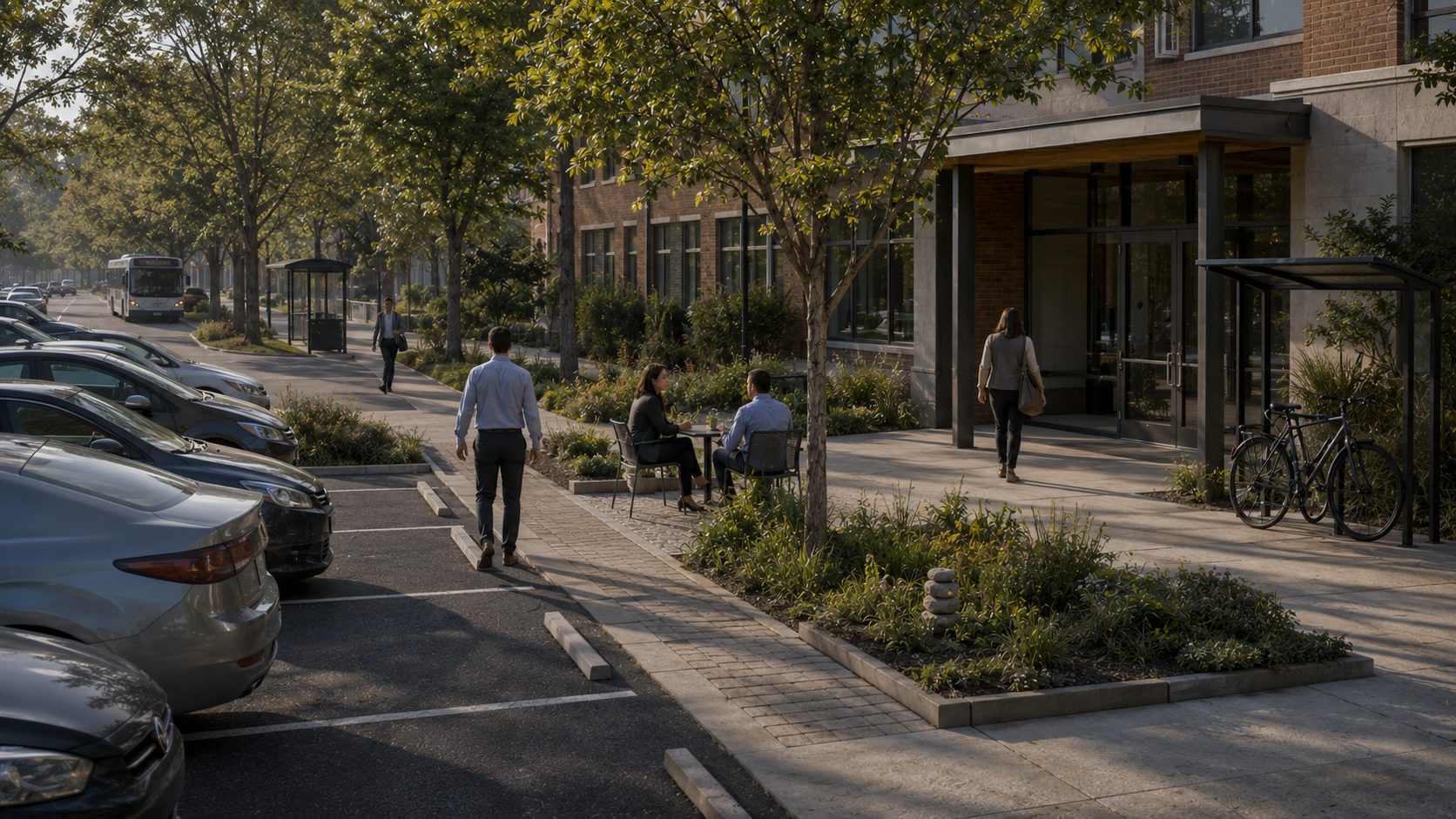
A parking space at work looks free to the person who uses it. It never is. The employer pays for the land, the paving and the upkeep, and that cost quietly subsidizes one way of getting to work over every other.
In one of the most cited findings in commute research, eight California employers tried a simple change: employees could keep their parking space, or take its cash value instead. Nothing was banned. Nothing was preached. An option was added, and people chose for themselves.
The share of employees driving alone fell from 76 percent to 63 percent.
76% → 63%
The share of employees driving alone, once the cash option existed.
Source: Shoup, Transport Policy, 1997
Why it worked
Nobody's mind was changed by a campaign. The conditions changed: a hidden subsidy became a visible choice, and each person weighed it against their own commute, their own schedule, their own life. Some kept the space. Many took the cash and found another way in. Both groups got something they valued more than what they had before.
That is the quiet lesson for any organization where parking is tight and growing tighter: the strongest results in this field come from changing what the workplace offers, and then letting people decide. The choice stays with the commuter. The conditions are the employer's to shape.
The limit
These results came from California employers in the 1990s, in settings where reasonable alternatives to driving existed. The effect depends on what alternatives are actually available, and results vary by place.
Source: Shoup, Transport Policy, 1997.