
The campus that made the bus free
July 16, 2026 · 2 min read
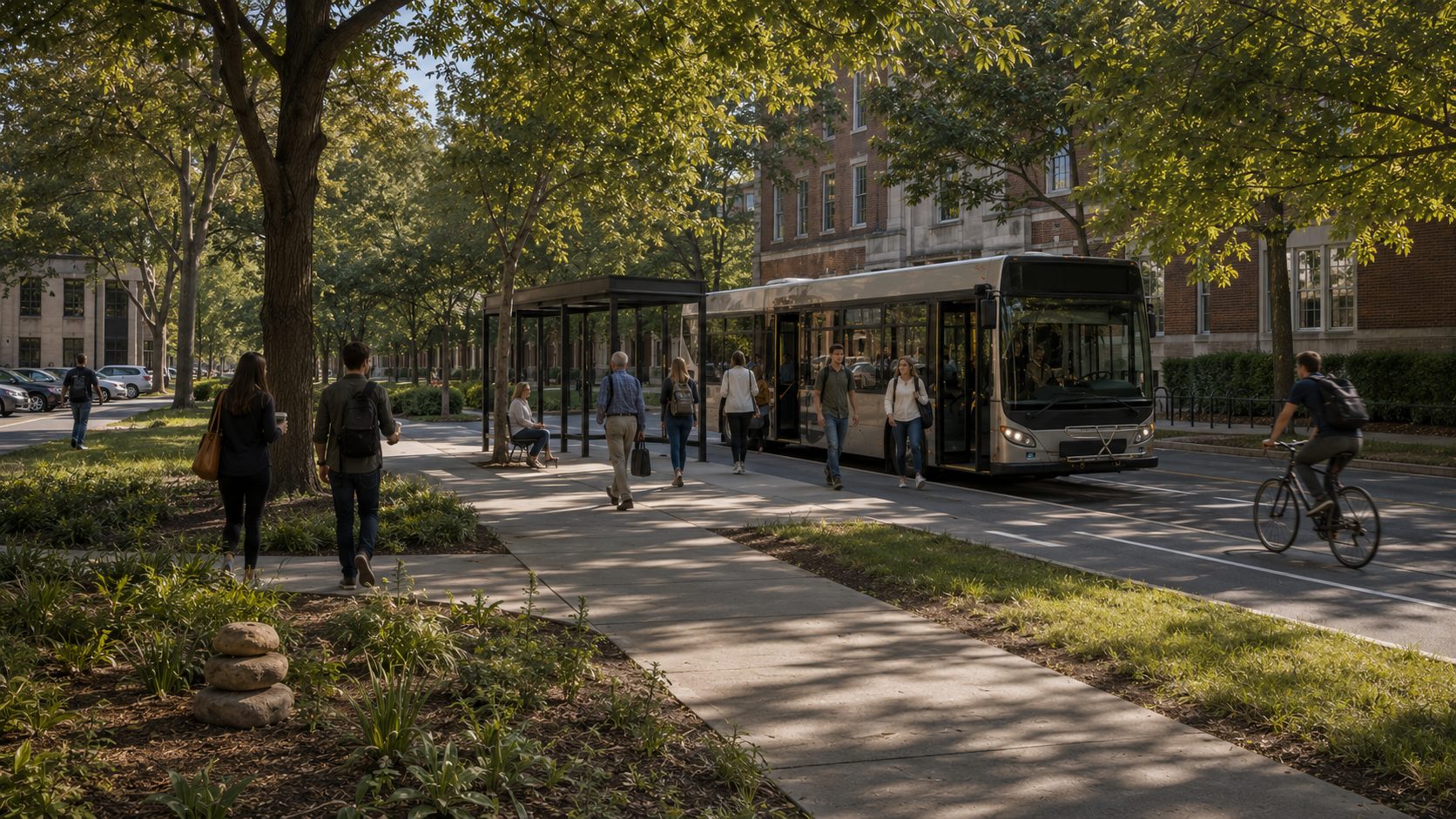
Universities and hospitals hold an unusual position in the commute: one institution controls the parking, the shuttle, the schedules, the benefits and the ground the campus sits on. When several conditions can improve at once, the results can be remarkable.
The University of Washington's U-PASS program is the standard example. When the university made its transit pass fully free to roughly 22,000 employees, vehicle trips to campus fell 16 percent in the first year.
16%
Fewer vehicle trips to campus in year one, with the drive-alone rate later reaching a record-low 13 percent.
Source: University of Washington U-PASS evaluations Over the years that followed, the share of commuters driving alone reached a record low of 13 percent.
What the campus teaches
The pass was one visible change on top of a deeper one: the university treated the commute as part of the institution, something it could shape with the same care as a building or a curriculum. Transit became free and simple. Parking stayed available, clearly priced. Every employee kept every option, and the options themselves got better.
For hospitals, universities and large campuses facing their next parking decision, the U-PASS story reframes the question. A parking structure costs tens of millions and takes years. Improving the conditions around the commute can defer that decision, and the results can be measured within a year.
The limit
Campuses control more of the commute's conditions than most employers, and Seattle's transit network gave the pass something real to unlock. Results of this size depend on both.
Source: University of Washington U-PASS program evaluations. Effects depend on the alternatives available.