
The street that became a place to stay
May 4, 2026 · 2 min read
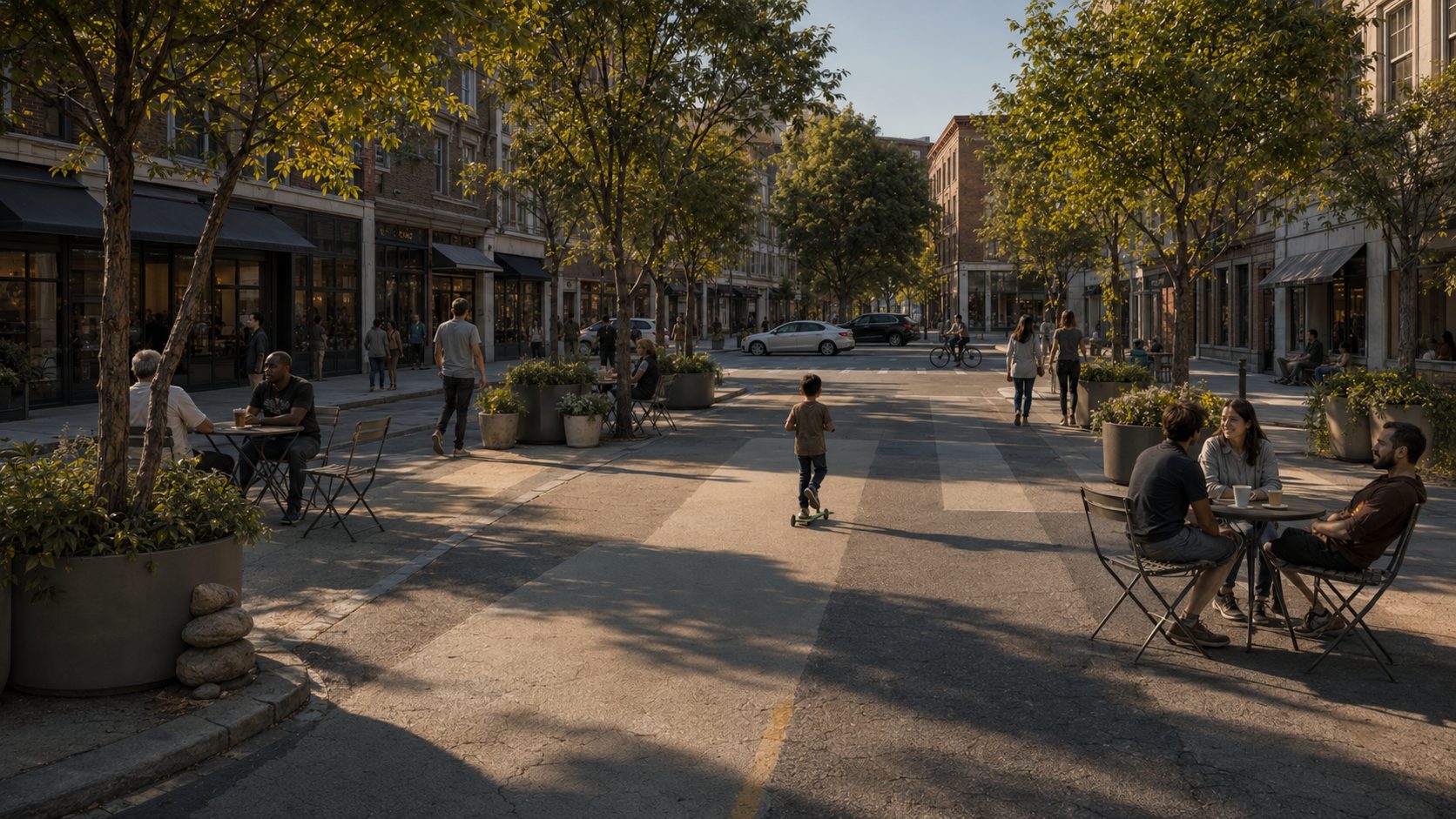
Before 2009, Times Square was one of the most crowded places on earth and gave almost none of itself to the crowd: 11 percent of its area served people on foot. That year, New York closed Broadway through the square to through traffic and let people use the space instead, first with paint and lawn chairs, later with permanent plazas.
The city then measured what changed. Pedestrian injuries in the project area fell 35 percent. Injuries to motorists and their passengers fell 63 percent. And 80 percent fewer people ended up walking in the roadway, because the space finally matched the way the place was actually being used.
−63%
Injuries to drivers and their passengers, the group nobody expected to benefit most.
Source: NYC DOT, Green Light for Midtown Evaluation, 2010
The counterintuitive part
The drivers got safer too, and by the larger margin. Removing a conflicted street from the grid simplified every intersection around it. When a street's layout and a street's use drift far enough apart, everyone is improvising, and improvisation is where injuries live. Realigning space with use made movement more legible for every kind of traveler at once.
What to apply
Almost no one has a Times Square, but nearly every organization and town has a place where space and use have drifted apart: the forecourt that is technically a driveway but functionally a plaza, the service street everyone walks down, the drop-off loop that fills with people on foot every morning at the same time. Find that place. Where the mismatch is largest, a modest reallocation, even a temporary one with paint and planters, is often the change people feel first, and it can be measured within months.
The limit
Midtown Manhattan's density and volumes are unlike anywhere else, and this record is evidence for reallocating space where use demands it, never a promise of equivalent numbers elsewhere. Widely repeated claims about retail effects are outside what the evaluation measured, so we leave them out.
Source: New York City Department of Transportation, Green Light for Midtown Evaluation Report, 2010.